


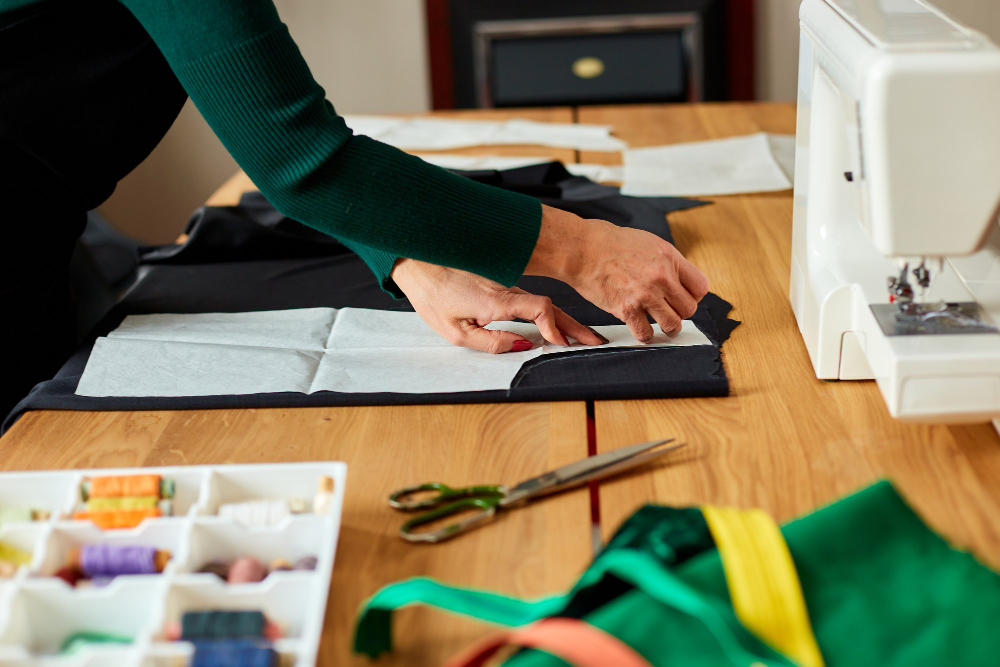
Cut and sew manufacturing gives clothing brands more control over how their garments are made.
Instead of starting with a finished blank garment, the manufacturer works with fabric, patterns, measurements, and production requirements to create the garment according to the approved specifications.
This makes cut and sew manufacturing useful for brands that want customized fits, fabrics, patterns, designs, labels, and finishing details.
Steve Apparel provides cut-and-sew manufacturing services covering product development, sampling, production, customization, quality checks, packaging, and distribution.
What Is Cut and Sew Manufacturing?
Cut and sew manufacturing is a clothing production method where fabric is cut into individual garment pieces according to an approved pattern and then sewn together to create the finished product.
A typical cut-and-sew process includes:
- Design development
- Pattern creation
- Fabric selection
- Tech pack or specifications
- Sampling
- Sample approval
- Fabric cutting
- Sewing
- Quality checking
- Customization
- Labeling
- Packaging
- Shipment
The exact process can vary depending on the product and manufacturer.
How Does Cut and Sew Manufacturing Work?
Step 1: Develop the Clothing Design
The process starts with the garment concept.
Brands may provide:
- Sketches
- Reference images
- Measurements
- Design files
- Tech packs
- Fabric requirements
- Color specifications
- Branding requirements
The manufacturer uses these details to understand the product.
Step 2: Create the Pattern
A pattern translates the garment design and measurements into pieces that can be cut from fabric.
Pattern measurements should be carefully developed for the required sizes.
Steve Apparel states that its patterns are customizable and can be adjusted until the desired design and fit are achieved.
Step 3: Select the Fabric
Fabric selection is an important part of cut-and-sew production.
Brands should consider:
- Fabric composition
- Weight
- Stretch
- Texture
- Comfort
- Durability
- Intended use
- Printing requirements
The selected fabric should work with the garment design and construction.
Step 4: Prepare the Tech Pack
A tech pack helps communicate important production details.
It can include:
- Measurements
- Sizes
- Colors
- Fabric details
- Construction information
- Branding
- Labels
- Packaging instructions
Steve Apparel says its mockup and tech-pack process includes details such as size, color, fabric, measurements, colorways, materials, and packing instructions.
Step 5: Make the Sample
Before bulk production, a sample is created.
The sample gives the brand an opportunity to check:
- Fit
- Measurements
- Fabric
- Construction
- Color
- Printing
- Embroidery
- Overall appearance
Steve Apparel develops a product sample before bulk production and moves forward after the sample is approved.
Step 6: Cut the Fabric
Once the pattern and sample are approved, fabric is prepared for cutting.
The fabric is cut according to the approved pattern and measurements.
Cut pieces are then organized by size, color, and garment requirements.
Step 7: Sew the Garment
The cut pieces move into the sewing stage.
Different garment sections are joined together according to the construction requirements.
Depending on the garment, this can include:
- Body panels
- Sleeves
- Collars
- Cuffs
- Waistbands
- Pockets
- Panels
- Closures
Step 8: Add Customization
After or during garment construction, the required customization can be completed.
Depending on the product, this may include:
- Screen printing
- Embroidery
- Sublimation
- Labels
- Tags
- Other add-ons
Steve Apparel includes customization and labeling within its production workflow.
Step 9: Quality Control
Quality checks help identify problems before shipment.
Steve Apparel states that garments go through quality checks during its cut-and-sew process, with products checked multiple times before shipment.
Quality checks can review:
- Measurements
- Stitching
- Fabric
- Color
- Printing
- Embroidery
- Finishing
- Overall appearance
Step 10: Packaging and Shipment
Once production and quality checks are complete, garments are prepared for packaging.
Steve Apparel describes its final workflow as labeling, packaging, and shipment after customization and production are completed.
Cut and Sew vs Blank Apparel
One major difference is the level of customization.
| Feature | Cut and Sew | Blank Apparel |
| Starting point | Fabric | Finished garment |
| Pattern | Customizable | Existing |
| Fit | Custom | Limited to available styles |
| Fabric choice | Greater control | Based on available garment |
| Design flexibility | High | More limited |
| Branding | Customizable | Usually added afterward |
| Best for | Custom product development | Faster customization of existing garments |
Cut and sew is often considered when a brand wants more control over the final garment.
Benefits of Cut and Sew Manufacturing
Greater Design Control
Brands can work with custom patterns, measurements, fabrics, and construction details.
Custom Fit
Patterns can be developed around the desired fit and sizing requirements.
Fabric Flexibility
Brands can select fabric according to their product requirements.
More Product Differentiation
Custom construction can help a brand create garments that are different from standard blanks.
Full Product Development
A cut-and-sew manufacturer can support the product from development and sampling through production.
What Clothing Brands Should Ask a Cut and Sew Manufacturer
Before choosing a manufacturer, ask:
- What is your MOQ?
- Can you develop custom patterns?
- Do you provide samples?
- Can you help with fabric selection?
- Do you provide tech-pack support?
- What customization options are available?
- How do you handle quality control?
- What is the production timeline?
- What labeling options are available?
- How are finished products packaged and shipped?
When Should a Brand Use Cut and Sew Manufacturing?
Cut and sew can be useful when a brand needs:
- Custom silhouettes
- Custom sizing
- Specific fabrics
- Unique construction
- Custom hoodies
- Custom T-shirts
- Custom jeans
- Custom sportswear
- Custom streetwear
- Custom private-label garments
Steve Apparel specifically states that it produces cut-and-sew products such as T-shirts, hoodies, jeans, and other customized garments.
Steve Apparel Cut and Sew Manufacturing
Steve Apparel provides cut-and-sew manufacturing from product development and pattern creation through sampling, cutting, sewing, customization, quality assurance, packaging, and shipment.
Its current manufacturing process begins with fabric selection, followed by cut-and-sew production, customization, labeling, packaging, and shipment.
The company also states that its overall clothing manufacturing service has a current MOQ of 200 units, while the exact requirements can depend on the project.
Final Thoughts
Cut and sew manufacturing gives clothing brands greater control over the final product.
From fabric and patterns to fit, construction, branding, and finishing, brands can develop garments around their own requirements rather than relying entirely on existing blank products.
The key is to provide clear specifications, review samples carefully, and work with a manufacturer that can manage the complete production process.
Ready to Develop Your Custom Clothing?
Steve Apparel provides cut-and-sew manufacturing, fabric selection, pattern development, sampling, customization, labeling, packaging, and bulk production for clothing brands.
Share your design or product requirements with Steve Apparel to start developing your custom clothing line.
FAQs
What does cut and sew mean in clothing?
Cut and sew means fabric is cut into garment pieces according to a pattern and then sewn together to create the finished clothing item.
Is cut and sew better than blank clothing?
They serve different purposes. Cut and sew offers greater control over fabric, fit, patterns, and construction, while blank apparel can be useful when a brand wants to customize an existing garment.
How much does cut and sew manufacturing cost?
The cost depends on factors such as fabric, design complexity, quantity, construction, customization, and packaging.
Do cut and sew manufacturers provide samples?
Many manufacturers do. Steve Apparel develops samples before bulk production and begins bulk manufacturing after sample approval.
Can I customize the fabric with cut and sew?
Yes. Fabric selection is an important part of cut-and-sew manufacturing and can be matched to the garment’s design and intended use.